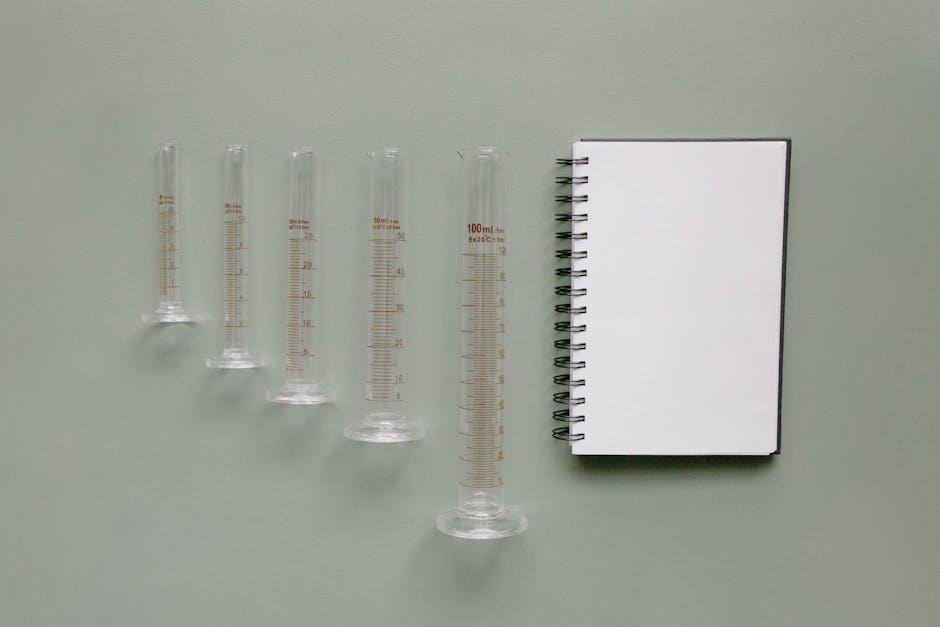
Chemistry lab manuals are essential guides for students, offering detailed experiment procedures and safety protocols. They facilitate practical learning and skill development in a controlled environment.
Purpose of a Chemistry Lab Manual
A chemistry lab manual serves as a structured roadmap for hands-on learning, bridging theoretical concepts with practical application. It meticulously outlines experiment procedures, ensuring students understand each step for accurate results and safe operation. These manuals aren’t merely instruction sets; they cultivate critical thinking, problem-solving skills, and meticulous observation – cornerstones of scientific inquiry.
Furthermore, a well-crafted manual emphasizes safety protocols, minimizing risks within the laboratory setting. It provides a record-keeping framework for observations, data collection, and analysis, fostering scientific rigor. Ultimately, the purpose extends beyond completing tasks; it’s about developing competent, responsible, and insightful chemists.
Importance of Safety in the Chemistry Lab
Safety is paramount in any chemistry laboratory, and a lab manual explicitly reinforces this principle. Chemical experiments often involve hazardous substances and equipment, demanding strict adherence to safety protocols. Manuals detail proper handling procedures, personal protective equipment (PPE) requirements – like goggles and gloves – and emergency response procedures.
Ignoring safety guidelines can lead to accidents, injuries, or even severe health consequences. A comprehensive manual emphasizes responsible conduct, waste disposal regulations, and awareness of potential hazards. Prioritizing safety isn’t simply about following rules; it’s about fostering a culture of caution and respect for the potentially dangerous nature of chemical interactions.
Essential Laboratory Equipment
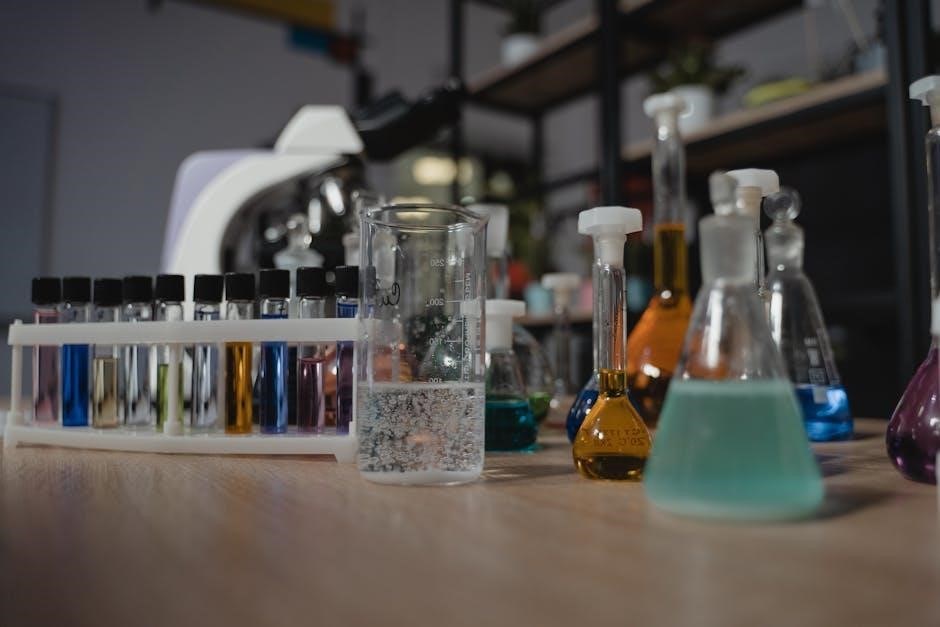
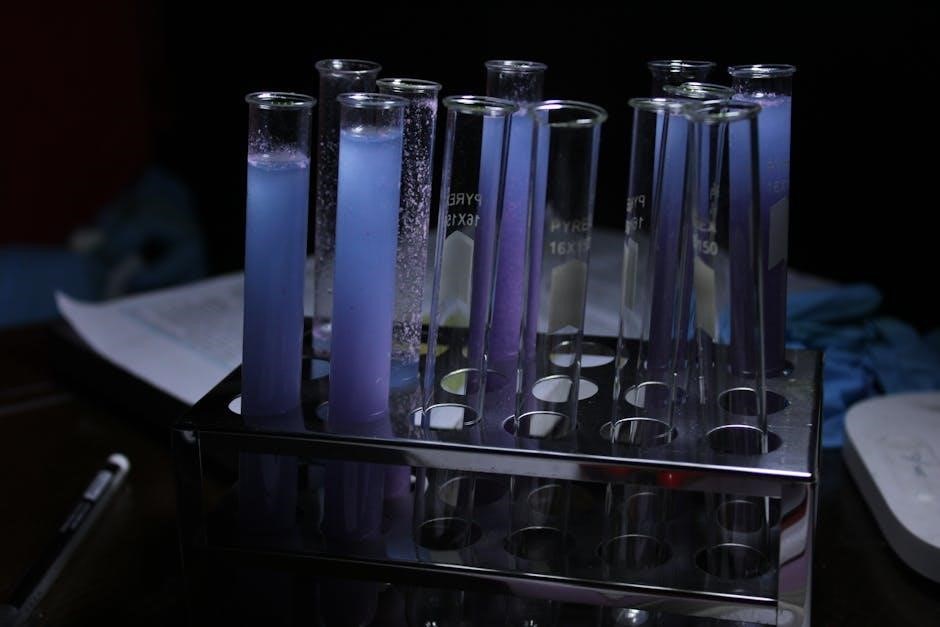
A well-equipped lab is crucial for successful experiments, featuring glassware, heating devices, precise measuring tools, and specialized instruments for analysis and observation.
Basic Glassware: Beakers, Flasks, and Cylinders
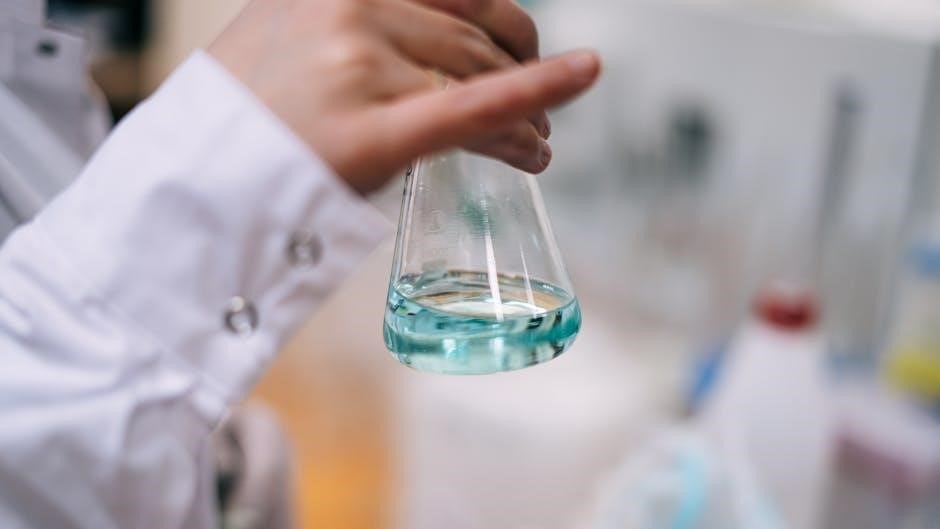
Beakers are widely used cylindrical containers with flat bottoms, ideal for stirring and mixing liquids, though not precise for measurements. Erlenmeyer flasks, shaped for swirling without spilling, are excellent for titrations and reactions. Graduated cylinders provide accurate volume measurements, crucial for preparing solutions and dispensing reagents.
Understanding the proper use and limitations of each piece is vital. Glassware should always be inspected for cracks or chips before use, ensuring safety and accurate results. Proper cleaning protocols are also essential to prevent contamination between experiments. Different sizes are available to accommodate varying volumes, and selecting the appropriate size enhances experimental control.
Heating and Stirring Equipment
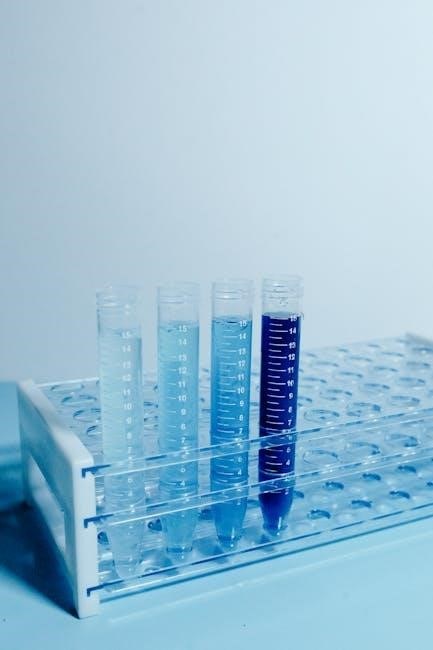
Hot plates provide controlled and even heating, superior to open flames for many applications, minimizing the risk of fire. Bunsen burners offer high-temperature heating but require careful handling and safety precautions. Magnetic stirrers utilize a rotating magnetic field to efficiently mix solutions, ensuring homogeneity.
Proper technique is crucial; always use heat-resistant gloves and glassware. Stirring bars should be appropriately sized for the vessel. Monitoring temperature is vital, and equipment should be regularly inspected for malfunctions. Combining heating and stirring often accelerates reactions and improves results, but requires careful observation.
Measuring Tools: Balances and Pipettes
Analytical balances provide precise mass measurements, crucial for quantitative analysis, requiring careful calibration and draft shield usage. Top-loading balances are suitable for routine weighing, offering sufficient accuracy for many experiments. Pipettes – volumetric, graduated, and micropipettes – deliver precise liquid volumes.
Correct pipette technique, including proper meniscus reading and vertical positioning, is essential. Always tare the balance before weighing. Understanding significant figures and error propagation is vital for accurate data recording. Regular maintenance and cleaning of these tools ensure reliable results and prolong their lifespan.
Common Laboratory Techniques
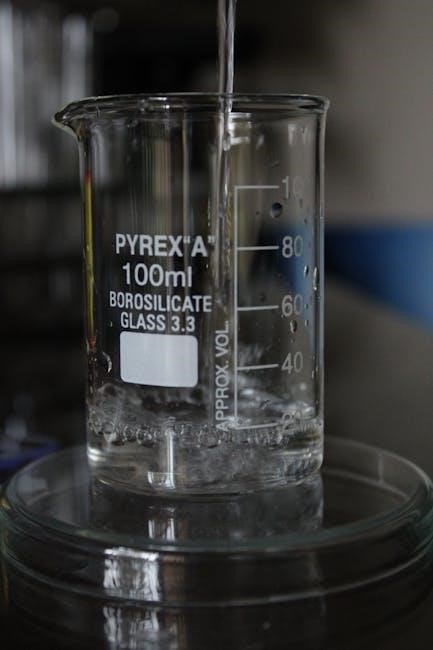
Essential techniques like filtration, titration, and heating are foundational in chemistry. Mastering these skills ensures accurate results and safe experiment execution in the lab.
Filtration and Decantation
Filtration is a crucial separation technique used to isolate solid particles from a liquid mixture. This process involves passing the mixture through a filter medium, like filter paper, allowing the liquid (the filtrate) to pass through while retaining the solid (the residue). Proper technique includes correctly folding the filter paper and ensuring a complete transfer of the mixture.
Decantation, conversely, is a simpler method for separating a liquid from a solid that has settled. Carefully pouring the liquid off the top, leaving the solid undisturbed, achieves this separation. Both techniques are fundamental for purification and isolation in various chemical experiments, requiring careful observation and precise execution for optimal results. Understanding the principles behind each method is vital for successful laboratory work.
Titration: Principles and Procedures
Titration is a quantitative analytical technique used to determine the concentration of an unknown solution (the analyte) by reacting it with a solution of known concentration (the titrant). This relies on a complete, measurable reaction between the two substances, often indicated by a color change using an indicator.
The procedure involves carefully adding the titrant to the analyte until the reaction is complete – the equivalence point. Accurate measurements of volumes are critical. Different types of titrations exist, including acid-base, redox, and complexometric. Mastering titration requires precise technique, careful observation, and understanding of stoichiometric calculations to achieve reliable results in the laboratory.
Heating and Evaporation Techniques
Heating and evaporation are fundamental techniques in chemistry labs, used for separating mixtures and concentrating solutions. Gentle heating, often using hot plates or heating mantles, facilitates solvent evaporation, leaving behind the solute. Careful control of temperature is crucial to prevent decomposition or splattering.
Evaporation is commonly employed to recover solids from solutions, while techniques like distillation utilize controlled heating and condensation for separating liquids with different boiling points. Proper ventilation and safety precautions, including the use of appropriate glassware and heat-resistant gloves, are essential when performing these procedures.
Qualitative Analysis
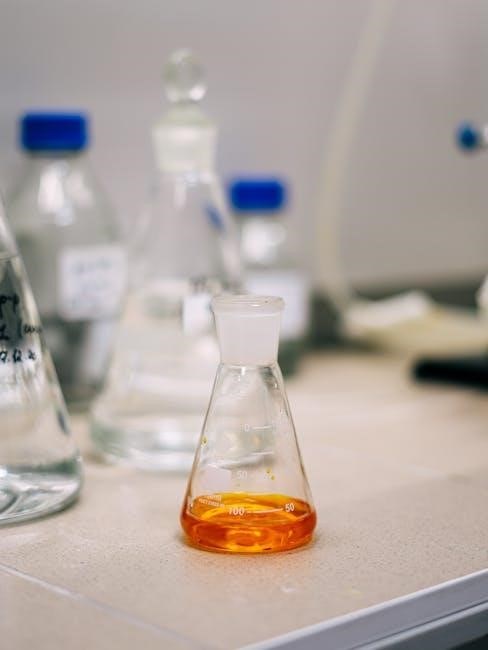
Qualitative analysis focuses on identifying substances present in a sample, utilizing tests for ions, gases, and functional groups to determine composition.
Identifying Cations
Identifying cations involves a systematic approach utilizing solubility rules and specific reagents to induce precipitation or form characteristic colored complexes. Initial steps often include grouping cations based on their behavior with dilute hydrochloric acid, separating them into distinct groups.
Subsequent tests employ reagents like sodium hydroxide, ammonium sulfide, or potassium cyanide to selectively precipitate or react with individual cations, allowing for their identification. Flame tests are also crucial, observing the distinct colors imparted by certain cations when heated, such as sodium’s yellow or potassium’s lilac flame. Careful observation and comparison with known standards are vital for accurate cation identification.
Identifying Anions
Identifying anions typically begins with preliminary tests for common anions like halides using silver nitrate, resulting in characteristic precipitates. Carbonates and sulfites are detected through acid treatment, observing the evolution of carbon dioxide or sulfur dioxide gas, respectively. Phosphate ions can be identified using ammonium molybdate, forming a yellow precipitate.
Further tests might involve specific reagents to confirm anion presence, such as barium chloride for sulfates. Understanding solubility trends and observing color changes during reactions are crucial. Accurate identification requires careful attention to detail and comparison with known anion behaviors, ensuring reliable qualitative analysis.
Testing for Gases
Testing for gases involves specific chemical reactions that confirm their identity. Hydrogen gas is identified by its flammable nature, causing a “pop” when ignited. Carbon dioxide turns limewater milky white, a classic qualitative test. Chlorine gas exhibits a greenish-yellow color and irritates the respiratory system.
Ammonia gas can be detected by its pungent odor and its ability to turn moist red litmus paper blue. Oxygen supports combustion, causing a glowing splint to re-ignite. Proper ventilation and caution are essential when handling gases, prioritizing safety during these identification procedures.
Quantitative Analysis
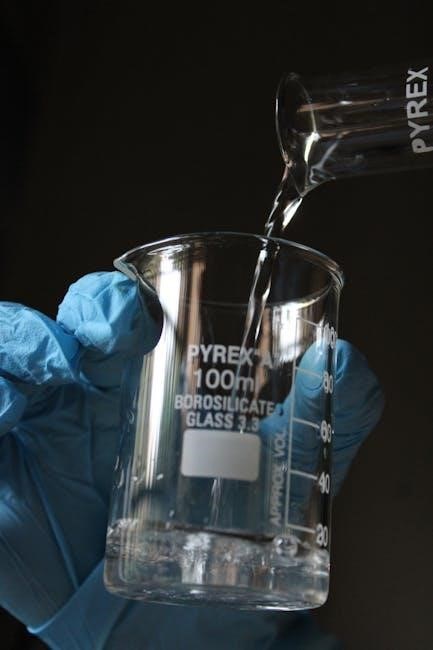
Quantitative analysis focuses on determining the amounts of substances, utilizing techniques like gravimetric and volumetric analysis for precise measurements and calculations.
Gravimetric Analysis
Gravimetric analysis is a cornerstone of quantitative chemistry, relying on the precise measurement of mass to determine the amount of an analyte. This technique involves converting the analyte into an insoluble form, often a precipitate, which is then carefully filtered, washed, dried, and weighed.
A successful gravimetric analysis demands meticulous technique to ensure complete precipitation, avoid co-precipitation of impurities, and obtain a product of known and consistent composition. Lab manuals detail procedures for preparing solutions, controlling precipitation conditions (pH, temperature, reagent addition rate), and properly handling filters and crucibles.
Calculations involve determining the mass of the precipitate and using stoichiometry to relate it back to the original amount of analyte. Understanding potential sources of error, such as incomplete precipitation or loss of product during transfer, is crucial for accurate results.
Volumetric Analysis
Volumetric analysis, also known as titration, is a quantitative method used to determine the concentration of a substance by reacting it with a solution of known concentration. Lab manuals provide detailed protocols for performing various titrations, including acid-base, redox, and complexometric titrations.
Key aspects covered include proper preparation of solutions (standardization), accurate use of burettes and pipettes, and careful observation of the endpoint – often indicated by a color change using an appropriate indicator. Understanding the reaction stoichiometry is vital for accurate calculations.
Manuals emphasize the importance of performing multiple trials to improve precision and calculating percent error. Sources of error, like improper endpoint detection or inaccurate volume measurements, are also discussed.
Spectrophotometry Basics
Spectrophotometry is a technique used to measure the absorbance or transmission of light through a solution, allowing for quantitative analysis of substances. Chemistry lab manuals detail the principles behind this method, explaining the relationship between concentration and light absorption (Beer-Lambert Law).
Instructions cover proper calibration of the spectrophotometer using blanks and standards, selecting appropriate wavelengths for analysis, and preparing sample solutions. Understanding the instrument’s components and their functions is crucial.
Manuals also address potential sources of error, such as stray light or cuvette imperfections, and how to minimize their impact on results. Data analysis techniques for determining unknown concentrations are thoroughly explained.
Organic Chemistry Experiments
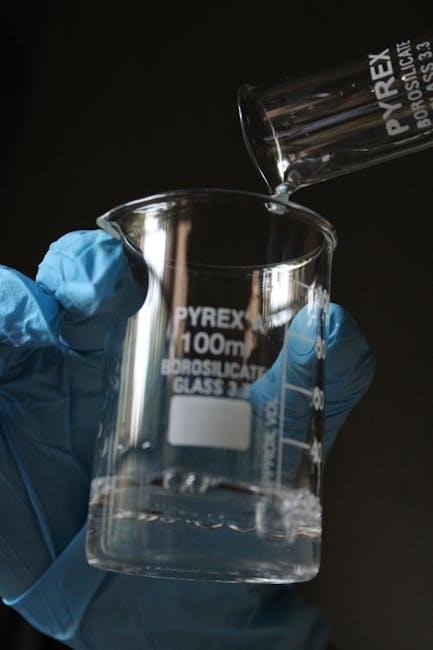
Organic chemistry labs focus on synthesis, purification, and identification of compounds, utilizing techniques like distillation and recrystallization, as detailed in manuals.
Distillation Techniques
Distillation is a crucial separation technique in organic chemistry, exploiting differences in boiling points. Lab manuals meticulously detail simple, fractional, and vacuum distillation procedures. Students learn to assemble apparatus correctly, control heating rates, and collect fractions based on temperature ranges.
Understanding theoretical concepts like Raoult’s Law and vapor pressure is vital, as manuals often include pre-lab questions. Proper technique minimizes errors and maximizes purity of the desired product. Safety precautions regarding flammable solvents and hot glassware are emphasized throughout the manual’s instructions. Practical exercises build confidence in performing these essential purification methods.
Recrystallization
Recrystallization, a fundamental purification technique, is thoroughly explained in chemistry lab manuals. Students learn to select appropriate solvents based on solubility principles – hot vs. cold solubility – and to perform slow cooling for optimal crystal formation. The manual details filtration techniques to isolate pure crystals from impurities remaining in the solution.
Emphasis is placed on minimizing crystal loss during transfer and washing. Troubleshooting common issues, like oiling out or premature crystallization, is also covered. Determining melting points to assess purity is a key component, reinforcing the connection between theory and practical application. Safety regarding solvent handling is paramount.
Identifying Functional Groups
Organic chemistry lab manuals dedicate significant space to identifying functional groups. Students learn to utilize various spectroscopic techniques – IR, NMR, and Mass Spectrometry – to deduce molecular structures. Detailed procedures for performing spot tests, observing characteristic reactions, and interpreting spectral data are provided.
The manuals emphasize correlating observed chemical properties with specific functional groups like alcohols, aldehydes, ketones, and carboxylic acids. Safety precautions when handling reagents and interpreting results are highlighted. Practical exercises build skills in analyzing unknown compounds and confirming structural assignments, fostering analytical thinking.
Inorganic Chemistry Experiments
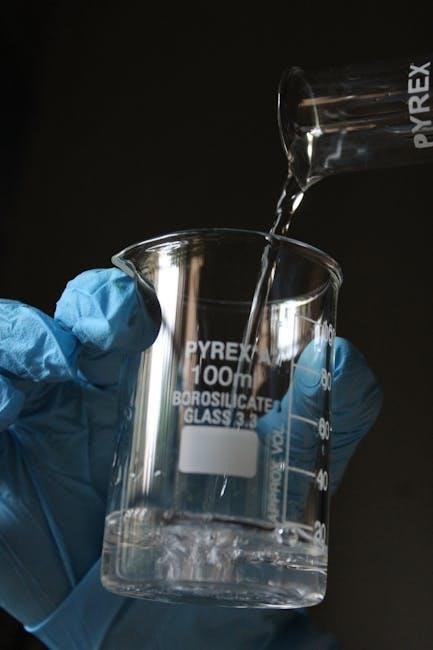
Inorganic chemistry labs focus on synthesizing compounds, studying complex formations, and analyzing salts, guided by detailed manuals for safe and accurate procedures.
Preparation of Inorganic Compounds
This section details procedures for synthesizing various inorganic compounds, emphasizing precise measurements and controlled reaction conditions. Lab manuals provide step-by-step instructions for preparing compounds like metal salts, coordination complexes, and oxides, often starting from elemental precursors or simple reactants.
Safety precautions are paramount, outlining proper handling of chemicals and waste disposal methods. Students learn techniques like precipitation, neutralization, and thermal decomposition, carefully documenting observations and yields. The manuals often include spectral data for compound identification and purity assessment, fostering a deeper understanding of inorganic chemistry principles and practical skills.
Complex Formation Reactions
This segment explores the creation of coordination complexes, showcasing interactions between metal ions and ligands. Lab manuals guide students through reactions forming complexes with varying geometries and properties, utilizing ligands like ammonia, chloride, and cyanide. Emphasis is placed on understanding factors influencing complex stability, such as ligand field strength and chelate effect.
Spectroscopic techniques, like UV-Vis spectrophotometry, are often employed to analyze complex formation and determine stoichiometry. Students learn to predict complex colors and magnetic properties, linking theory to experimental observations. Safety protocols for handling metal salts and ligands are detailed, ensuring responsible laboratory practice.
Analysis of Inorganic Salts
This section details methods for identifying and quantifying ions present in inorganic salts. Lab manuals outline qualitative analysis techniques, including precipitation reactions and flame tests, to detect specific cations and anions. Quantitative analysis focuses on gravimetric and volumetric methods for determining salt composition.
Students learn to perform solubility tests, analyze salt solutions, and calculate percentage composition. Emphasis is placed on accurate weighing, solution preparation, and data interpretation. Safety precautions for handling corrosive salts and acids are thoroughly explained, promoting safe laboratory practices and responsible chemical handling.
Data Analysis and Reporting
Lab manuals guide students in meticulously recording observations, performing error analysis, and constructing comprehensive lab reports with clear, concise findings.
Recording Observations
Detailed observation recording is paramount in any chemistry experiment, as outlined in most lab manuals. Students should document all qualitative and quantitative data meticulously, noting color changes, precipitate formation, temperature variations, and precise measurements.
This includes utilizing appropriate units and significant figures. A well-maintained lab notebook, or a designated data sheet, should feature clear labeling of all recorded information.
Furthermore, any deviations from the experimental procedure, unexpected occurrences, or potential sources of error must be promptly noted. Accurate and comprehensive records form the foundation for meaningful data analysis and reliable conclusions, ensuring the reproducibility and validity of experimental results.
Error Analysis
Comprehensive error analysis is a crucial component of any chemistry lab report, as emphasized in standard lab manuals. It involves identifying and evaluating potential sources of uncertainty in experimental measurements and calculations.
Errors can be categorized as random (affecting measurements unpredictably) or systematic (consistent deviations).
Students should quantify these errors where possible, calculating percent error and propagating uncertainties through calculations. A thorough discussion of how these errors might have influenced the results, and suggestions for minimizing them in future experiments, demonstrates a strong understanding of experimental limitations and scientific rigor.
Writing a Lab Report
A well-structured lab report, guided by your chemistry lab manual, is vital for communicating experimental findings effectively. Reports typically include an introduction outlining the experiment’s purpose, a detailed procedure section, and a presentation of results with clear tables and figures.
Crucially, the discussion section should interpret the results, comparing them to expected values and addressing any discrepancies.
Proper formatting, including citations and a conclusion summarizing key findings, is essential; Following the specific guidelines provided in your lab manual ensures clarity, accuracy, and a professional presentation of your work.
No Responses