
Graphic design principles encompass balance, proximity, alignment, repetition, contrast, and white space – foundational elements for impactful visual communication and effective compositions.
Understanding these principles is crucial for creating designs that are not only aesthetically pleasing but also clearly convey messages to a targeted audience.
These design elements, as detailed in resources like David Dabner’s and Richard Poulin’s handbooks, form the core of successful graphic work.
What are Graphic Design Principles?
Graphic design principles are the fundamental rules and guidelines that govern the arrangement of visual elements within a composition. They dictate how elements interact, creating a cohesive and impactful design.
These aren’t strict rules, but rather tools designers utilize to achieve specific aesthetic and communicative goals. Core principles, like balance and proximity, influence visual weight and grouping.
Alignment and repetition establish order and consistency, while contrast and white space create visual interest and readability. Resources, such as those by Pat Morin and David Dabner, highlight these as essential building blocks.
Effectively applying these principles ensures designs are not only visually appealing but also effectively communicate their intended message to the target audience.
Why are Design Principles Important?

Design principles are vitally important because they provide a framework for effective visual communication. Without them, designs can appear chaotic, confusing, and ultimately fail to connect with the intended audience.
Applying these principles – balance, proximity, alignment, repetition, contrast, and white space – ensures clarity, hierarchy, and a strong visual flow.
Understanding these concepts, as emphasized in resources by Poulin and Dabner, allows designers to intentionally guide the viewer’s eye and convey messages effectively.
They elevate designs beyond mere aesthetics, transforming them into powerful tools for communication and problem-solving within the realm of graphic design.

Core Design Principles
Core design principles – balance, proximity, alignment, repetition, contrast, and white space – are fundamental building blocks for compelling and effective visual compositions in graphic design.
Balance
Balance in graphic design refers to the distribution of visual weight within a composition. It’s a crucial principle for creating stability and a sense of order, preventing designs from feeling lopsided or chaotic.
There are two primary types: symmetrical and asymmetrical. Symmetrical balance achieves equilibrium through mirrored elements, often conveying formality and tradition.
Conversely, asymmetrical balance utilizes differing elements to create visual weight, offering a more dynamic and modern aesthetic. Effective asymmetrical designs still feel balanced, despite the lack of mirroring.
Understanding how to distribute visual weight – considering shapes, colors, and textures – is key to achieving harmonious and engaging designs, as highlighted in foundational graphic design resources.
Symmetrical Balance
Symmetrical balance creates a sense of stability and formality by mirroring elements along a central axis. This approach often evokes feelings of tradition, order, and calmness within a design.
It’s achieved by arranging identical or near-identical elements on either side of an imaginary line, resulting in a visually harmonious and predictable composition.
While effective, overuse of symmetry can sometimes appear static or rigid. Designers often employ slight variations to introduce visual interest while maintaining overall balance.
This principle, fundamental to graphic design, is frequently used in logos, layouts, and designs aiming for a classic or authoritative aesthetic, as detailed in design literature.
Asymmetrical Balance
Asymmetrical balance achieves visual equilibrium without strict mirroring, utilizing differing elements with varying visual weights. This dynamic approach creates a more modern, energetic, and often more engaging composition.
It relies on strategically placing elements to balance each other – a larger element might be counterbalanced by a smaller, more visually dominant one.
Successfully implementing asymmetrical balance requires a keen understanding of visual perception and how different elements attract the eye.
This technique, a cornerstone of contemporary graphic design, offers greater flexibility and visual interest compared to symmetrical arrangements, fostering a sense of movement and vitality.
Proximity
Proximity, in graphic design, refers to the relationship between elements and how closely they are positioned. Grouping related items together visually signals their connection, enhancing comprehension for the viewer.
Effective use of proximity minimizes visual clutter and establishes clear organizational structures within a design.
By strategically adjusting the space between elements, designers can create visual hierarchy, guiding the eye and emphasizing important information.
This principle, fundamental to clear communication, ensures that related content is perceived as a unified whole, improving usability and overall aesthetic appeal.
Grouping Related Elements
Grouping related elements leverages the principle of proximity to visually connect items sharing a common purpose or characteristic. This creates immediate understanding for the audience, simplifying complex information.
Elements grouped closely are perceived as a single unit, reducing cognitive load and improving comprehension.

Consider headlines with accompanying text, or a series of icons representing related features – these benefit from tight grouping.
Strategic application of this technique enhances visual organization, making designs more intuitive and user-friendly, ultimately improving the effectiveness of communication.
Creating Visual Hierarchy with Proximity
Proximity isn’t just about grouping; it’s a powerful tool for establishing visual hierarchy within a design. Varying the amount of space between elements signals their relative importance.
Items placed closer together are perceived as more related, while increased spacing indicates separation or lesser connection.
For example, a primary headline should have less space above it than supporting subheadings, drawing the eye first to the most crucial information;
Mastering this technique guides the viewer’s eye, ensuring a clear and logical flow through the design, enhancing comprehension and engagement.
Alignment
Alignment establishes order and visual connection within a design, creating a sense of unity and professionalism. It involves arranging elements along common axes – left, right, or center.
Consistent alignment prevents a chaotic appearance and guides the viewer’s eye through the composition.
Employing grids is a highly effective method for achieving precise alignment, ensuring elements relate harmoniously.

Strategic alignment isn’t merely aesthetic; it clarifies relationships between elements, improving readability and overall comprehension of the message being conveyed.
Left, Right, and Center Alignment
Left alignment is commonly used for body text, mirroring natural reading patterns in many languages, offering clarity and ease of comprehension.
Right alignment can be effective for captions or short blocks of text, but overuse can hinder readability due to uneven spacing.
Center alignment is often reserved for headings or short phrases, creating a formal or elegant look, though it can appear less structured for longer content.
Choosing the appropriate alignment depends on the design’s purpose and the desired visual impact, contributing to overall balance and visual flow.
Using Grids for Alignment
Grids provide a foundational structure for aligning elements in graphic design, ensuring consistency and visual harmony throughout a composition.
They establish clear relationships between text, images, and other design components, fostering a sense of order and professionalism.
A well-defined grid system facilitates precise alignment, preventing elements from appearing haphazard or disorganized, enhancing readability and visual appeal.
Utilizing grids streamlines the design process, allowing for efficient arrangement and modification of elements while maintaining a cohesive aesthetic.
Repetition
Repetition strengthens a design by reinforcing visual elements and creating a sense of unity and consistency throughout the composition.
Repeating colors, shapes, fonts, or spatial relationships establishes a recognizable pattern, guiding the viewer’s eye and enhancing comprehension.
This principle isn’t merely about duplication; it’s about thoughtfully reusing elements to build a cohesive visual language.
Effective repetition avoids monotony by varying the scale or placement of repeated elements, maintaining visual interest while establishing a clear connection.
Repeating Visual Elements
Repeating visual elements, such as specific shapes, lines, or colors, creates a strong sense of visual connection within a design.
This technique isn’t about exact copies, but rather consistent application to establish a recognizable motif and reinforce the overall aesthetic.
Consider repeating a particular texture – combining rough and smooth – to draw attention and add depth, as highlighted in design resources.
Strategic repetition guides the viewer’s eye, creating a visual rhythm and enhancing the overall harmony of the composition, making it more engaging.
Establishing Consistency Through Repetition
Repetition is vital for establishing consistency, a cornerstone of effective graphic design, ensuring a unified and professional appearance across all design elements.
Consistent use of typography, color palettes, and graphic elements builds brand recognition and strengthens the visual message.
This principle extends beyond visual elements to include consistent spacing and layout, creating a cohesive user experience.
By thoughtfully repeating key design features, designers can create a clear visual language that resonates with the target audience and reinforces the overall brand identity.
Contrast
Contrast in graphic design refers to the juxtaposition of differing elements – a powerful tool for creating visual interest and hierarchy.
This can be achieved through color variations, like combining dark and light shades, or through differences in size and shape, as highlighted in design resources.
Effective contrast guides the viewer’s eye, emphasizing key information and creating a dynamic composition.
Utilizing rough and smooth textures together also exemplifies contrast, adding depth and complexity to the design.
Ultimately, contrast ensures elements stand out, preventing monotony and enhancing readability.
Color Contrast
Color contrast is a fundamental aspect of design, leveraging differences in hue, saturation, and value to create visual impact.
Pairing complementary colors – those opposite on the color wheel – generates strong contrast, immediately drawing the eye.
However, effective color contrast isn’t solely about vibrancy; subtle variations can also be impactful, enhancing readability and establishing hierarchy.
Consider accessibility; sufficient contrast between text and background is crucial for users with visual impairments.
Thoughtful color choices, informed by color theory, elevate a design, ensuring key elements are noticed and the message is effectively conveyed.
Size and Shape Contrast
Size and shape contrast plays a vital role in establishing visual hierarchy and guiding the viewer’s eye through a design.
Varying the size of elements immediately signals importance; larger elements typically command more attention than smaller ones.
Juxtaposing different shapes – geometric versus organic, for example – creates visual interest and prevents monotony.
Combining rough textures with smooth ones, as noted in design resources, exemplifies this principle in a tactile way.
Strategic use of size and shape differences ensures key information stands out, improving comprehension and overall design effectiveness.

Visual Elements & Principles
Visual elements like color and typography, combined with design principles, form the foundation of effective communication, shaping how messages are perceived and understood.
Color Theory

Color theory is a fundamental aspect of graphic design, deeply influencing visual perception and emotional response. Understanding the color wheel – encompassing hues, saturation, and brightness – allows designers to create harmonious and impactful palettes.
Beyond aesthetics, color psychology plays a vital role; different colors evoke specific feelings and associations, impacting how a design is interpreted by the target audience.
Strategic color choices can establish brand identity, highlight key information, and guide the viewer’s eye, ultimately enhancing the effectiveness of visual communication.
Careful consideration of color contrast is also essential for readability and accessibility, ensuring designs are inclusive and easily understood by all.
Understanding the Color Wheel
The color wheel is a visual representation of color relationships, crucial for designers. It organizes hues – red, yellow, and blue – and their mixtures, revealing complementary, analogous, and triadic color schemes.
Complementary colors (opposite each other) create high contrast, while analogous colors (adjacent) offer harmony. Triadic schemes use three evenly spaced colors for vibrancy.
Mastering the wheel allows for informed palette selection, ensuring visual balance and impact. Understanding saturation and brightness further refines color choices, influencing mood and visual hierarchy.
Effective use of the wheel elevates graphic design, contributing to compelling and aesthetically pleasing compositions.
Color Psychology in Design
Color psychology explores how colors influence human emotions and perceptions, a vital aspect of graphic design. Different hues evoke distinct feelings; for example, blue often signifies trust and serenity, while red conveys energy and excitement.
Designers leverage this understanding to strategically communicate messages and shape brand identity. Warm colors (reds, oranges, yellows) tend to be stimulating, while cool colors (blues, greens, purples) are calming.
Cultural context also impacts color interpretation, requiring sensitivity in visual communication. Thoughtful color choices enhance a design’s effectiveness and resonance with the target audience.
Typography
Typography is the art and technique of arranging type to make written language legible, readable, and appealing when displayed. Effective font selection and establishing a clear hierarchy are paramount in graphic design.
Considerations include typeface style, size, spacing (leading and kerning), and alignment to ensure optimal readability. A well-defined typographic hierarchy guides the viewer’s eye, prioritizing information and enhancing comprehension.
Prioritizing both legibility – how easily individual letters are distinguished – and readability – how comfortably text flows – is crucial for impactful visual communication.
Font Selection and Hierarchy
Font selection significantly impacts a design’s overall tone and message; choosing appropriate typefaces is vital for effective communication. Establishing a typographic hierarchy guides the viewer’s eye, prioritizing information through variations in size, weight, and style.
Headings should contrast with body text, creating a clear visual flow. Utilizing different font families can further differentiate elements, but consistency is key. A well-defined hierarchy ensures readability and enhances the user experience.
Careful consideration of these elements elevates graphic design beyond mere aesthetics, fostering clarity and impact.
Readability and Legibility
Readability concerns the ease with which a reader can understand blocks of text, influenced by factors like line length, leading (line spacing), and font size. Legibility, conversely, focuses on the distinctiveness of individual letterforms – how easily each character is recognized.
Optimal contrast between text and background is crucial for both. Avoiding overly decorative fonts for body text enhances legibility. Prioritizing these aspects ensures the message is accessible and doesn’t strain the viewer’s eyes, contributing to effective visual communication.
These fundamentals are core to successful graphic design.
White Space (Negative Space)
White space, or negative space, is the area around and between elements in a design – it’s not necessarily white colored! It’s a crucial element, providing “breathing room” for the eye and improving comprehension. Effective use of white space prevents a cluttered appearance and guides the viewer’s attention.
Strategically placed negative space can create visual hierarchy, emphasize key elements, and improve overall balance. It’s fundamental to clear communication, ensuring the design feels open and inviting, rather than overwhelming. Mastering this principle elevates the design’s impact.
The Importance of Breathing Room
“Breathing room,” achieved through ample white space, is vital for visual clarity and user experience. Designs lacking sufficient space feel cramped and overwhelming, hindering effective communication. This negative space allows individual elements to stand out, preventing visual fatigue and improving readability.

It’s not simply about aesthetics; strategic spacing enhances comprehension and directs the viewer’s eye. A well-paced layout, utilizing breathing room, creates a more professional and inviting impression. Prioritizing this principle demonstrates respect for the audience and elevates the overall design quality.
Using White Space to Guide the Eye
Strategic application of white space isn’t merely about emptiness; it’s a powerful tool for visual direction. Designers leverage negative space to create pathways for the viewer’s eye, leading them through the composition in a deliberate sequence. Grouping related elements with proximity and separating them with space establishes clear visual hierarchy.
This technique ensures key information receives appropriate attention, while less critical details remain accessible but don’t overwhelm. Thoughtful use of white space enhances readability, improves comprehension, and ultimately strengthens the overall impact of the design.
Advanced Design Considerations
Effective visual communication requires understanding hierarchy, target audiences, and current trends, alongside ethical practices – crucial for impactful and responsible graphic design.
Hierarchy
Visual hierarchy is paramount in guiding the viewer’s eye and prioritizing information within a design; it dictates the order in which elements are perceived.
Establishing a clear visual flow involves utilizing techniques like size variations, color contrast, and strategic placement to emphasize key messages.
Effective hierarchy ensures that the most important information grabs attention first, followed by supporting details, creating a logical and intuitive experience.
This prioritization isn’t arbitrary; it’s rooted in understanding the design’s purpose and the intended message, as highlighted in resources on graphic design principles.
A well-defined hierarchy enhances readability and comprehension, ultimately improving the overall effectiveness of the design and its communication goals.
Visual Hierarchy and Information Prioritization
Visual hierarchy directly impacts how users process information, making information prioritization a critical design consideration.
Designers leverage elements like size, color, and contrast to signal importance, guiding the viewer’s eye to crucial details first.
Effective prioritization ensures key messages aren’t lost amidst less significant content, enhancing comprehension and engagement.
This process, central to graphic design principles, involves strategically arranging elements to create a clear order of visual importance.
Ultimately, a strong visual hierarchy transforms a chaotic layout into a focused and easily digestible communication tool, improving user experience.
Creating a Clear Visual Flow
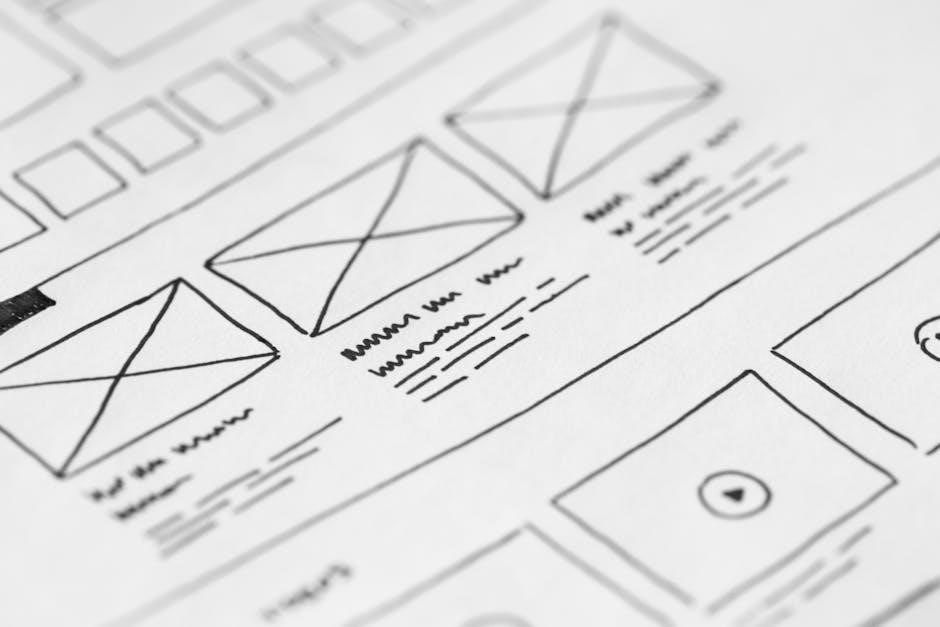
A clear visual flow guides the viewer’s eye through a design, ensuring a logical and intuitive experience. This is achieved through strategic use of graphic design principles.
Elements like alignment, proximity, and directional cues (lines, shapes) direct attention and establish a reading order.
Effective flow prevents confusion and helps users quickly grasp the intended message, enhancing overall communication.
Prioritizing a smooth visual journey is essential for impactful graphic work, as highlighted in resources on visual communication.
Ultimately, a well-defined flow transforms a static design into a dynamic and engaging experience for the audience.
Visual Communication
Visual communication, at its core, is effectively conveying messages through visual elements – a cornerstone of graphic design.
This involves understanding how shapes, colors, typography, and imagery interact to create meaning and evoke specific responses.
Crucially, successful visual communication requires a deep understanding of the target audience and their existing knowledge base.
Designs must resonate with viewers, ensuring clarity and avoiding misinterpretation, as emphasized in resources on design principles.
Ultimately, it’s about translating ideas into compelling visuals that inform, persuade, or inspire action.
Effectively Conveying Messages
Effectively conveying messages in graphic design hinges on a strategic application of visual elements and design principles.
This means prioritizing information through visual hierarchy, utilizing contrast to draw attention, and employing typography for readability.
Consideration must be given to how color psychology impacts perception and how imagery reinforces the intended message.
A clear understanding of composition, including balance and alignment, is vital for guiding the viewer’s eye.
Ultimately, successful message delivery relies on thoughtful execution and a focus on clarity, as highlighted in foundational design resources.
Understanding Target Audience
Understanding the target audience is paramount in graphic design, influencing every design decision from color palettes to typography choices.
Effective visual communication requires tailoring the message to resonate with the specific demographics, psychographics, and cultural context of the intended recipients.
Considering audience preferences ensures the design is not only aesthetically pleasing but also relevant and impactful.
Accessibility is also key; designs should be inclusive and easily understood by all members of the target group.
Prioritizing audience needs leads to more successful and engaging graphic solutions.
Design Trends & Ethics
Staying current with design trends is vital for creating modern and relevant visuals, yet it must be balanced with ethical considerations.
While embracing new styles, designers should prioritize originality and avoid plagiarism, respecting intellectual property rights.
Ethical graphic design also encompasses responsible messaging, avoiding harmful stereotypes or misleading information.
Accessibility is a crucial ethical component, ensuring designs are inclusive and usable by individuals with disabilities.
Maintaining transparency and honesty in visual communication builds trust and strengthens the impact of the design.
Staying Current with Design Trends
The graphic design landscape is constantly evolving, demanding continuous learning and adaptation to emerging trends.
Following industry blogs, attending workshops, and analyzing competitor work are effective methods for staying informed.
However, trend adoption should be strategic, aligning with brand identity and target audience preferences.
Experimentation with new styles – like evolving typography or color palettes – can invigorate designs, but avoid blindly following fads.
Understanding the why behind trends, rather than just the what, allows for informed and impactful design choices.
Ethical Considerations in Graphic Design
Graphic design carries ethical responsibilities beyond aesthetics; designers must consider the impact of their work.
Avoiding misleading imagery, respecting copyright laws, and ensuring accessibility are paramount.
Designs should be inclusive, avoiding perpetuation of harmful stereotypes or biases.
Transparency regarding image sourcing and manipulation is crucial for building trust.
Furthermore, designers should be mindful of the environmental impact of their choices, considering sustainable practices.
Prioritizing honesty, fairness, and social responsibility elevates design beyond mere visual appeal.
No Responses